
If your home feels too small, a home addition is often the better move than buying a bigger house, especially if you like your neighborhood and your current layout mostly works. But that’s not always true. The right answer depends on your home’s condition, your lot, and how the real costs of each option compare. Here’s how to think through the decision.
For many homeowners, a home addition can be the better solution. Instead of leaving a neighborhood you love and starting over, an addition allows you to customize your existing home to better fit your lifestyle. Before making a decision, consider the advantages and drawbacks of each option.
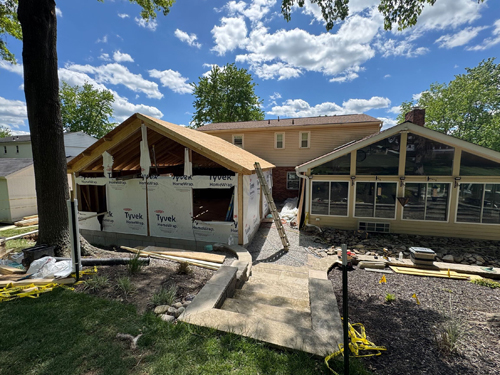
Should You Remodel or Move? Start With What’s Actually Missing
The first step is determining exactly what your current home is missing. Do you need an additional bedroom for a growing family? Is your kitchen too small for entertaining? Would a home office, larger family room, or first-floor primary suite make everyday life easier?
If your home has a good layout and you simply need more functional space, an addition may be an excellent choice. On the other hand, if you need substantially more space or have several major layout problems, moving could potentially make more sense.
Understanding your needs will help you determine whether you need an entirely different house—or simply a better version of the home you already have.
The Advantages of Adding On Instead of Moving
1. Stay in a Neighborhood You Love
One of the biggest advantages of an addition is that you don’t have to give up your current location. If you enjoy your neighborhood, have established relationships with neighbors, or value your home’s proximity to work, schools, parks, and amenities, staying put can be extremely valuable.
Moving often means compromising on location. You may find a larger house but end up farther from the places and people that are important to you. An addition gives you the opportunity to gain space without sacrificing the location you already enjoy.
2. Customize Your Home to Your Lifestyle
When you purchase another house, you are typically buying someone else’s design choices. You may find the extra square footage you need, but the kitchen, bathrooms, bedrooms, and overall layout may not be exactly what you want.
A home addition provides you with much more control; you can design the new space around your specific needs and preferences. Whether you want a spacious kitchen, dedicated home office, larger family room, guest suite, or expanded primary bedroom, an addition can be tailored to your lifestyle.
You can also use the remodeling process to improve the connection between the new space and the existing home, creating a cohesive design rather than simply adding square footage
3. Avoid the Hassle of Moving
Moving is more than simply buying and selling houses. There are inspections, financing, negotiations, closing costs, packing, moving expenses, cleaning, repairs, and countless other details.
An addition can be a significant project, but it allows you to avoid many of the disruptions associated with relocating. You don’t have to sell your property, search for another home, or pack up everything you own.
For homeowners who otherwise love their house, eliminating the need to move can be a major benefit.
4. Increase Your Home’s Value
A thoughtfully designed addition can increase the functionality and appeal of your home while increasing its resale value. Additional bedrooms, bathrooms, living areas, and well-designed kitchens can all make a property more attractive to future buyers.
If you already have a large amount of equity in your home, you can be confident that your investment in expanding and remodeling your existing space will be safe.
When Moving Makes More Sense Than an Addition
Despite the advantages of an addition, moving isn’t always the wrong answer. If your current property has significant structural problems, a very small lot, zoning limitations, or a layout that cannot realistically be changed, purchasing another home may be more practical.
It is important to consult an experienced remodeling and addition company such as John Hill Construction in order to make this assessment. A reputable company should not hesitate to encourage you to move if it makes more sense than an addition.
How to Compare the True Costs of Each Option
When deciding between moving and adding on, look beyond the obvious numbers. For a move, consider the purchase price, realtor commissions, closing costs, moving expenses, repairs, new furnishings, and potential changes to your mortgage or property taxes. For an addition, consider design fees, permits, construction, finishes, potential upgrades to existing spaces, and temporary disruptions during construction.
Getting estimates for both options can make the decision much clearer.
Consider the Long-Term Picture
Finally, think about how your needs may change over the next five, ten, or even fifteen years. An addition should solve more than today’s problem—it should ideally make your home work better for your future.
If you love your property and neighborhood, an addition can offer the best of both worlds: the familiarity and location of your current home combined with the space and functionality you need.
Making the Right Decision
Choosing between moving and adding an addition is ultimately a personal decision. However, if you already love your home, have a property that can accommodate an addition, and simply need more functional space, expanding your existing home can be a compelling alternative to moving.
Rather than starting over somewhere else, you can invest in the home you already know and love. With careful planning and the right design, an addition can transform your current house into a home that better fits your lifestyle for years to come. See some of our past remodeling projects!
Frequently Asked Questions
Is it cheaper to add on or move?
It depends on your local real estate market and the scope of the addition. Moving involves realtor commissions, closing costs, and moving expenses on top of the new home’s price. An addition avoids those costs but has its own expenses in design, permits, and construction. Getting real estimates for both is the only way to know for sure in your situation.
Should I renovate or move?
If you like your neighborhood and your home’s layout mostly works, renovating or adding on is usually worth exploring first. If your home has major structural issues, a very small lot, or zoning limits that block expansion, moving may be the more practical choice.
How do I know if my home can handle an addition?
A licensed contractor can evaluate your lot size, zoning restrictions, and your home’s existing structure to determine what’s possible. This is a good first step before comparing costs.
Recent Comments